Smart EV Home Chargers UK: What’s Actually Worth Installing
A smart EV charger does more than top up your car - it can shift charging to cheap overnight rates, balance against home solar, and integrate with the rest of your smart home.
Contents
- 7kW vs 22kW: What Your House Can Actually Support
- Before You Buy: Installation Basics
- What Installation Typically Costs
- Best for Solar Homes: Myenergi Zappi
- Best for Smart Tariffs: Ohme Home Pro
- Best Build Quality: Hypervolt Home 3
- Widely Available Alternative: Wallbox Pulsar Plus
- When a “Smart” Charger Isn’t Worth the Premium
- Frequently Asked Questions
- Can I install an EV charger myself to save money?
- Do I need a specific EV energy tariff to benefit from a smart charger?
- Do I actually need 22kW charging at home?
- Our Recommendation
A smart EV charger isn’t just a faster way to charge than a three-pin plug - the “smart” part is what makes it worth the extra cost over a basic charger. The best ones shift your charging to the cheapest overnight electricity rate automatically, balance charging against home solar generation if you have panels, and let you monitor and schedule everything from an app. What actually determines which charger and which speed is right for your house, though, comes down to your electrical supply and daily mileage more than any single feature comparison.
7kW vs 22kW: What Your House Can Actually Support
All four chargers below are available in 7kW single-phase versions, which is what the overwhelming majority of UK homes can actually deliver - standard domestic electricity supply in the UK is single-phase, and 7kW is close to the practical ceiling for that supply without a costly upgrade. 22kW charging needs a three-phase electricity supply, which is common in commercial premises and some newer housing developments but genuinely rare in existing UK domestic properties - upgrading to three-phase specifically to get 22kW home charging is a significant, expensive undertaking (a new supply from the DNO, not just a different charger) that rarely makes sense for a single household vehicle. In practical terms: a 7kW charger fully charges a typical mid-size EV battery from near-empty in around 6-8 hours, which comfortably fits an overnight charging window regardless of tariff - the extra speed of 22kW mostly matters for fleet or workplace charging with multiple vehicles cycling through fewer charge points, not a single home charger.
Before You Buy: Installation Basics
- Professional installation is required - all mains-wired home EV chargers must be fitted by a qualified, registered electrician, both for safety and to keep any warranty valid
- Check your earthing arrangement - homes on a PME (protective multiple earthing) supply need a charger with PEN fault protection built in; your installer will confirm this during a site survey
- Check current grant eligibility - the OZEV EV chargepoint grant has narrowed significantly over recent years and is now mainly targeted at flats and rental properties rather than owner-occupied houses with off-street parking, which used to qualify but generally no longer do; check the current gov.uk guidance for your specific property situation before assuming any discount applies
- Planning permission is usually not needed, but check if you’re in a conservation area - permitted development rights generally cover a standard home EV chargepoint on a house wall or a dedicated post, but conservation areas, listed buildings, and chargers positioned to front a highway can have additional restrictions - a competent installer will flag this, but it’s worth checking your property status yourself before committing to a specific mounting position
What Installation Typically Costs
Beyond the charger hardware itself (roughly £400-1,000 depending on model), professional installation typically adds £300-600 depending on how far the charger sits from your consumer unit and whether any additional groundwork or cable routing is needed. Get at least two quotes from OZEV-registered installers, since installation cost varies more between installers than the hardware price does between chargers. A tethered charger (with the charging cable permanently attached) is typically £50-100 more than an untethered one (where you use your own cable), but is more convenient day to day - untethered is worth considering mainly if you want the flexibility to use a different cable length or connector type across more than one vehicle.
Best for Solar Homes: Myenergi Zappi
The Myenergi Zappi is a British-made charger built specifically around solar diversion - if you have solar panels, it can charge your car using only your home’s excess solar generation rather than drawing from the grid, automatically ramping charging speed up and down as cloud cover changes. It also supports scheduled off-peak charging via the myenergi app for homes without solar, and integrates with the wider myenergi ecosystem (including their hot water diverter, Eddi). If solar is part of your setup now or planned for later, this is the strongest option in the UK market.
- Pros: best-in-class solar diversion, British-made and widely supported by UK installers, expands into wider myenergi ecosystem
- Cons: premium price, solar-specific benefits obviously depend on already having (or planning) panels
Check Myenergi Zappi on Amazon UK →Affiliate link
Best for Smart Tariffs: Ohme Home Pro
The Ohme Home Pro is built around smart tariff integration, with direct partnerships with UK energy suppliers offering EV-specific tariffs (such as Octopus Intelligent Go). It automatically schedules charging into the cheapest overnight window and can respond dynamically to half-hourly pricing on suitable tariffs, rather than a single fixed cheap-rate window. It’s compact, includes a built-in 4G/Wi-Fi connection so it doesn’t rely solely on your home network, and its app is one of the better-reviewed in the category.
- Pros: deepest smart-tariff integration, responds to dynamic half-hourly pricing, built-in connectivity independent of home Wi-Fi
- Cons: full benefit depends on being on a compatible EV tariff; less advantage on a flat-rate tariff
Check Ohme Home Pro on Amazon UK →Affiliate link
Best Build Quality: Hypervolt Home 3
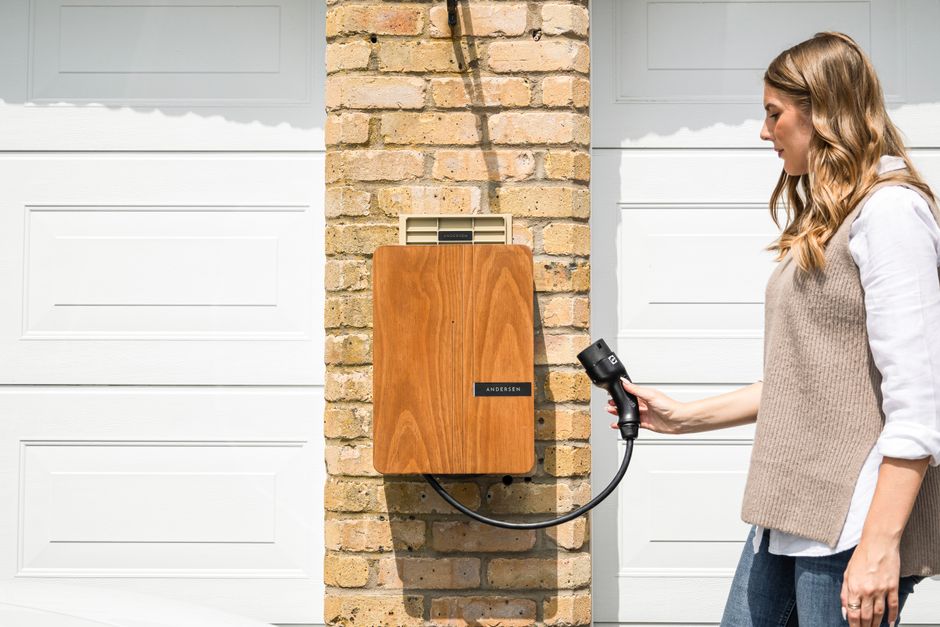
The Hypervolt Home 3 is a British-designed charger with a compact, minimalist build (no visible cable reel or bulky housing) and a strong reputation for reliability. It supports scheduled charging, solar compatibility with a separate sensor kit, and works with the Hypervolt app for monitoring and remote control. A good middle-ground option if you want a charger that looks unobtrusive mounted on a house wall.
- Pros: most compact, minimalist design of the group, strong reliability reputation
- Cons: solar support needs a separate sensor kit rather than being built in like the Zappi
Check Hypervolt Home 3 on Amazon UK →Affiliate link
Widely Available Alternative: Wallbox Pulsar Plus
The Wallbox Pulsar Plus is a Spanish-made charger that’s widely stocked and installed by UK electricians, with solid app-based scheduling, power sharing (useful if you’re also running other high-draw appliances), and Alexa/Google Home integration for voice-triggered charging status checks. It’s a safe, well-supported choice if your installer already has experience fitting this brand specifically. Its power-sharing feature is worth understanding properly if your household also runs another high-draw appliance on the same circuit area (an electric shower, an induction hob) - it automatically reduces charging current when other loads spike rather than risking tripping your main fuse, which matters more on older properties with a lower overall supply capacity.
- Pros: widely stocked and installed, so easy to find an experienced installer; power-sharing feature for households with high overall electrical draw
- Cons: less specialised for solar diversion than Zappi, less deep smart-tariff integration than Ohme
Check Wallbox Pulsar Plus on Amazon UK →Affiliate link
When a “Smart” Charger Isn’t Worth the Premium
Worth being honest about this: if you do genuinely low daily mileage and mostly charge at work or a free/subsidised public charge point, the cost-shifting and solar-diversion features that justify a smart charger’s premium over a basic (non-app-connected) charger may simply never get used enough to matter. A basic charger still needs professional installation and still costs real money - it’s not free - but it’s meaningfully cheaper than the smart models here, and if you’re never going to check an app or care about which half-hour your car charges in, that saved cost is better spent elsewhere. The smart features earn their keep specifically for households on a time-of-use tariff, with solar panels, or who genuinely want usage monitoring - not as a default upgrade for every EV owner.
Frequently Asked Questions
Can I install an EV charger myself to save money?
No - home EV chargers must be installed by a qualified, registered electrician in the UK, both for electrical safety and to keep the manufacturer warranty valid. There’s no legitimate DIY route to save on this cost.
Do I need a specific EV energy tariff to benefit from a smart charger?
Not strictly, but the biggest running-cost savings come from pairing a smart charger with a time-of-use or dedicated EV tariff (like Octopus Intelligent Go) - on a flat-rate tariff, the smart features still help with monitoring and solar diversion but the overnight-cost-shifting benefit is smaller.
Do I actually need 22kW charging at home?
Almost certainly not - see the section above. Most UK homes only have a single-phase supply capable of 7kW anyway, and 7kW comfortably covers an overnight full charge for typical daily driving, so the extra speed of 22kW (which needs a rare and expensive three-phase upgrade) is very rarely worth pursuing for a single home vehicle.
Our Recommendation
If you have (or plan to add) home solar: Myenergi Zappi - nothing else in this list does solar diversion as well. If you’re on or considering an EV smart tariff like Octopus Intelligent Go: Ohme Home Pro. For a minimalist, reliable all-rounder with no particular solar or tariff priority: Hypervolt Home 3. Whichever you choose, get quotes from at least two OZEV-registered installers - installation cost and any current grant eligibility varies more than the hardware price does, and virtually every UK home only needs 7kW single-phase regardless of which brand you pick.
As an Amazon Associate we earn from qualifying purchases. This doesn’t affect our recommendations.
Related guides
 GUIDE
Smart Home Gear That Actually Works in a Small Flat or Shared House (UK)
What to buy for communal areas vs your own room in a house share, and how…
 GUIDE
Smart TVs and Streaming Boxes for a Connected Home: UK Picks
Apple TV, Fire TV Stick and Chromecast compared for how well each plugs into your existing…
 GUIDE
Smart Dehumidifiers UK: Which Ones Are Actually Worth Automating
Meaco, Pro Breeze and EcoAir smart dehumidifiers compared for tackling UK damp and condensation, plus a…