Smart Bulbs UK: Is Philips Hue Worth It Over IKEA and the Budget Brands?
Comparing the best smart bulbs available in the UK in 2026 - from Philips Hue to IKEA TRÅDFRI and budget Matter options. Includes UK fitting guide (B22 vs E27).
Contents
- Our Top Picks
- The UK Wiring Problem Nobody Warns You About: Physical Switches
- Philips Hue White & Colour Ambiance - Best Overall
- Pros
- Cons
- IKEA TRÅDFRI - Best Budget Zigbee Option
- Pros
- Cons
- Govee Matter Bulb - Best Budget with Matter
- Pros
- Cons
- Sengled Zigbee Bulb - Best for Home Assistant
- Pros
- Cons
- TP-Link Tapo L530E - Best Standalone Wi-Fi Option
- Pros
- Cons
- Buying Guide: What to Consider
- B22 vs E27 Fitting
- Zigbee vs Wi-Fi vs Matter
- Do You Need Colour?
- Our Recommendation
- Frequently Asked Questions
- Do smart bulbs work without a hub?
- What’s the difference between B22 and E27 bulb fittings?
- Can smart bulbs work with Alexa and Google Home?
- Are smart bulbs worth the cost compared to standard LEDs?
- My smart bulb keeps dropping offline or flickering - why?
- Related Guides
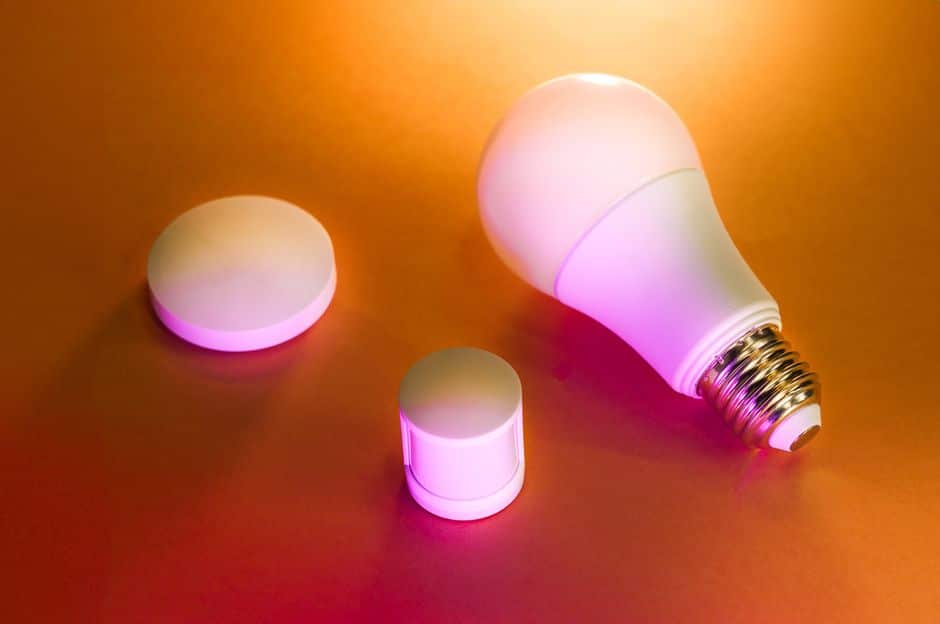
Smart bulbs are the easiest entry point into a smart home - no wiring, no electrician, just screw in and connect to your app. But the market is crowded, and not every smart bulb is worth your money. We’ve compared the leading options available in the UK in 2026, from the premium Philips Hue ecosystem to genuinely impressive budget alternatives - and there’s one very common UK wiring issue, covered below, that causes more smart bulb problems than any product choice does.
Our Top Picks
| Bulb | Best For | Approx Price (per bulb) |
|---|---|---|
| Philips Hue White & Colour Ambiance | Best overall ecosystem | £29-£44 |
| IKEA TRÅDFRI | Best budget Zigbee option | £8-£12 |
| Govee Matter Bulb | Best budget with Matter | £10-£15 |
| Sengled Zigbee Bulb | Best for Home Assistant | £10-£14 |
| TP-Link Tapo L530E | Best standalone Wi-Fi option | £9-£13 |
The UK Wiring Problem Nobody Warns You About: Physical Switches
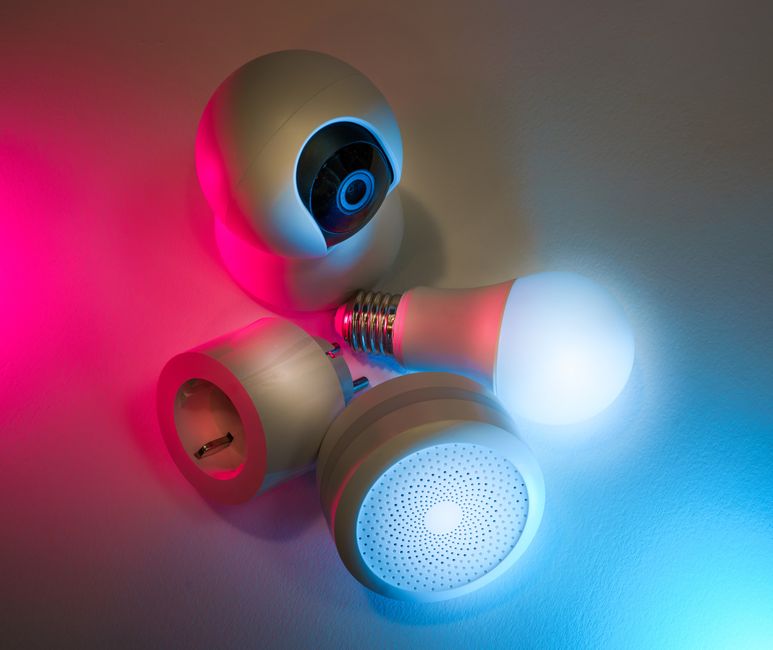
This causes more smart bulb frustration than any spec comparison, and it’s almost never mentioned in buying guides. Two very common UK wiring situations break smart bulbs outright: old-style rotary or trailing-edge dimmer switches, and two-way switching (a light controlled from two physical switches, standard on UK stairs and long hallways). A smart bulb needs constant mains power to stay connected to Wi-Fi or Zigbee and to respond to app/voice commands - if a traditional dimmer switch is cutting or altering the voltage rather than passing full power through, the bulb can flicker, fail to reach full brightness, or refuse to connect at all. With two-way switching, if either physical switch gets used to turn the light off, the bulb loses power entirely and drops off your network until someone flips the switch back on - defeating the entire point of app or voice control. The fix is straightforward once you know about it: replace an old dimmer switch with a standard on/off switch (a smart bulb does its own dimming via the app, so a physical dimmer is redundant anyway) and, for two-way circuits, make sure both physical switches stay in the “on” position and control the light exclusively through the app, voice, or a smart switch rather than the wall.
Philips Hue White & Colour Ambiance - Best Overall
Philips Hue remains the gold standard for smart bulbs in the UK and globally. The quality of light is genuinely excellent - the colour rendering is accurate (Hue bulbs are rated at a CRI, colour rendering index, of 90+, meaningfully higher than many budget competitors’ bulbs which often sit in the 80-85 range; a higher CRI means colours under the bulb look closer to how they’d appear in natural daylight, which matters more than people expect for anything colour-critical like reading, makeup, or matching paint), the dimming is smooth right down to very low levels, and the colour temperature range (from warm 2200K to cool daylight 6500K) covers every mood and use case.
Hue uses Zigbee as its underlying protocol, requiring the Hue Bridge (a small hub that connects to your router) to unlock the full feature set. The Bridge enables local control - your automations still run if your internet goes down - and is the reason Hue integrates so reliably with Home Assistant, Apple HomeKit, Google Home, and Alexa.
The main complaint is price. At £29-£44 per bulb, building out a full home with Hue bulbs becomes expensive quickly. The ecosystem argument is strong if you’re committed, but the cost of entry is real.
From direct use, not just the spec sheet: we run a mix of Hue bulbs across several rooms in our own home, plus a Hue multicolour strip light, controlled through a combination of Home Assistant automations and Alexa voice commands rather than the Hue app on its own. In practice the ecosystem argument genuinely holds up day to day - once the bulbs are in Home Assistant they behave like any other light entity for automation purposes, no different to cheaper Zigbee bulbs from a control standpoint, and the strip light specifically earns its keep for ambient/accent lighting in a way a standard bulb shape just can’t do.
Pros
- Exceptional light quality and colour accuracy (90+ CRI)
- Smooth, flicker-free dimming to very low levels
- Excellent ecosystem - works with everything
- Local control via Hue Bridge (no internet needed for automations)
- Huge accessory range (switches, motion sensors, gradient strips)
Cons
- Expensive per bulb
- Hue Bridge required for full features (extra cost and device)
- Cheaper bulbs offer similar colour functionality
Price: £29-£44 per bulb. Check on Amazon UK. Note: most UK homes use B22 bayonet fitting - check your lamp before ordering E27 screw variants.
IKEA TRÅDFRI - Best Budget Zigbee Option
IKEA’s TRÅDFRI range offers solid Zigbee smart bulbs at prices that won’t make you wince when replacing an entire house. The white spectrum bulbs (warm to cool white) are particularly good value at around £8-£10 each, and they integrate directly with the Philips Hue Bridge, meaning you can mix IKEA bulbs into a Hue system and control everything from one app.
TRÅDFRI also supports Home Assistant natively via Zigbee2MQTT or ZHA, making it a favourite among home automation enthusiasts who want local control without paying Hue prices. The colour versions are less impressive than Hue - colours are slightly less vibrant and the dimming isn’t quite as smooth (a lower CRI in the low-to-mid 80s range accounts for a lot of this) - but for white light in everyday rooms they’re perfectly adequate.
One UK-specific note: IKEA sells both B22 (bayonet) and E27 (screw) variants in UK stores, which is helpful given that UK light fittings are split between the two.
Pros
- Excellent value - roughly a third of the price of Hue
- Zigbee protocol works with Hue Bridge and Home Assistant
- Available in both B22 and E27 in UK stores
- IKEA’s network of UK stores makes returns easy
Cons
- Colour versions less impressive than Hue
- IKEA app is functional but basic
- Requires TRÅDFRI hub or Hue Bridge - not standalone
Price: £8-£12 per bulb from IKEA UK. Also available on Amazon UK.
Govee Matter Bulb - Best Budget with Matter
Govee has produced some of the most competitively priced Matter-compatible bulbs available in the UK. With Matter support, these bulbs connect directly to Apple Home, Google Home, or Amazon Alexa without requiring a separate hub - and they’ll remain compatible as the Matter standard evolves.
Light quality is good for the price - bright enough for most rooms and the colour reproduction is solid. The main limitation is that these are Wi-Fi bulbs, not Zigbee, which means each one creates a network connection. In a home with dozens of smart bulbs, Wi-Fi congestion can become an issue. For smaller setups or a room-by-room approach, they’re excellent value.
Pros
- Matter support - no hub required, works with all major ecosystems
- Good colour quality for the price
- No subscription or account required for Matter control
Cons
- Wi-Fi - can strain router in larger deployments
- Govee app is feature-rich but can feel cluttered
- Less ecosystem depth than Hue
Price: £10-£15 per bulb. Check on Amazon UK.
Sengled Zigbee Bulb - Best for Home Assistant
Sengled’s Zigbee bulbs are a favourite specifically within the Home Assistant community, for a simple reason: unlike Hue, Sengled bulbs pair with any standard Zigbee coordinator (via Zigbee2MQTT or ZHA) without needing their own proprietary hub or bridge at all - you’re not locked into buying Sengled’s own hub if you already have any Zigbee coordinator running. Light quality and colour accuracy sit a step below Hue (Sengled doesn’t publish CRI figures as prominently, and real-world colour rendering is noticeably more basic), but for a household building a Home Assistant setup around an existing Zigbee mesh rather than a single-brand ecosystem, being able to add bulbs without another hub is the more relevant advantage than absolute light quality.
Pros
- Works with any Zigbee coordinator, no proprietary hub required
- Genuinely native Home Assistant support via Zigbee2MQTT/ZHA
- Competitively priced against IKEA and Govee
Cons
- Colour quality and CRI noticeably behind Hue
- Needs an existing Zigbee coordinator - not a starting point on its own
- App is basic if you’re not routing through Home Assistant
Price: £10-£14 per bulb. Check on Amazon UK.
TP-Link Tapo L530E - Best Standalone Wi-Fi Option
If you want smart bulbs without any hub and without committing to Matter, the TP-Link Tapo L530E is one of the most reliable and well-reviewed budget options in the UK. It connects directly to your Wi-Fi, works with the Tapo app, and supports both Alexa and Google Home voice control.
The Tapo app is clean and easy to use - arguably better than Govee’s - and the E27 (screw) fitting means it works in most standard UK lamps. The main limitation is no HomeKit support and no Matter, but if you’re in the Alexa or Google ecosystem and want a simple, affordable setup, it’s a strong pick.
Pros
- Very affordable, often under £10 on deal
- Clean, well-designed app
- Reliable Wi-Fi connection
- Works with Alexa and Google Home
Cons
- No HomeKit, no Matter
- E27 only - no B22 variant (check your fittings)
- Wi-Fi protocol, not Zigbee
Price: £9-£13. Check on Amazon UK.
Buying Guide: What to Consider
B22 vs E27 Fitting
This is uniquely important for UK buyers. The UK uses both B22 bayonet cap fittings (the twist-and-lock type, most common in ceiling lights) and E27 screw fittings (common in table lamps and some pendants). Before ordering, check the fitting on each light you’re replacing. Most smart bulb ranges are available in both, but not all - and ordering the wrong type is an easy mistake.
Zigbee vs Wi-Fi vs Matter
Zigbee bulbs (Hue, IKEA, Sengled) require a hub but create a reliable mesh network and use very little bandwidth. Wi-Fi bulbs (Govee, Tapo) require no hub but add devices to your Wi-Fi network. Matter bulbs are increasingly available and offer the best long-term compatibility across ecosystems. For a large deployment, Zigbee is typically more reliable; for a small number of bulbs, Wi-Fi or Matter is simpler.
Do You Need Colour?
Colour-changing bulbs cost significantly more than white-only or white-spectrum bulbs. In most rooms - hallways, kitchens, bathrooms - white spectrum (warm to cool white) is all you need and looks far more natural. Colour bulbs are worth it in living rooms, bedrooms, or spaces where you want lighting scenes and atmosphere. Don’t assume you need colour everywhere.
Our Recommendation
If you’re starting fresh and want the best long-term smart lighting setup, start with the Philips Hue Bridge (around £45) and fill your main rooms with a mix of Hue bulbs where quality matters and IKEA TRÅDFRI bulbs where budget matters - they work together seamlessly on the same Bridge.
If you want the simplest possible setup with no hub, the Govee Matter bulbs offer the best future-proofing at a budget price. And if you just want affordable, reliable smart bulbs for Alexa or Google Home without any complexity, the TP-Link Tapo L530E is hard to beat for the money. If you’re building a Home Assistant setup around an existing Zigbee mesh rather than a single ecosystem, Sengled is worth a look before assuming you need a proprietary hub.
Frequently Asked Questions
Do smart bulbs work without a hub?
Many do. Govee, TP-Link Tapo, and Meross bulbs connect directly to your Wi-Fi and need no hub at all. Philips Hue bulbs can run in Bluetooth mode without a bridge for basic control, but you get the full feature set (remote access, automations, geofencing) only when connected to the Hue Bridge.
What’s the difference between B22 and E27 bulb fittings?
B22 (bayonet cap) and E27 (Edison screw) are the two most common fittings in UK homes. B22 is the traditional UK standard - two pins that click in with a twist. E27 is a screw fitting more common in newer lamps and pendants. Check your existing bulb before ordering: the fitting type is usually printed on the base.
Can smart bulbs work with Alexa and Google Home?
Yes - all the bulbs in this guide work with both Amazon Alexa and Google Home for voice control. Govee’s Matter-certified bulbs also work with Apple HomeKit and Samsung SmartThings, making them the most future-proof choice if you use multiple ecosystems.
Are smart bulbs worth the cost compared to standard LEDs?
For bulbs you use frequently and want to automate - yes. Being able to schedule lights, tie them to your presence, or create scenes adds real daily convenience. For low-use lights like a spare room, a standard LED is perfectly fine. The best approach is to start with two or three smart bulbs in key areas and expand from there.
My smart bulb keeps dropping offline or flickering - why?
The most common cause in UK homes is a physical dimmer switch or two-way switching cutting power to the bulb intermittently - see the wiring section above. Before assuming a faulty bulb, check whether the wall switch is an old dimmer (replace it with a standard on/off switch) or part of a two-way circuit (make sure both physical switches stay on and control the light via the app instead).
Related Guides
Related guides
 GUIDE
Smart Home Gear That Actually Works in a Small Flat or Shared House (UK)
What to buy for communal areas vs your own room in a house share, and how…
 GUIDE
Smart TVs and Streaming Boxes for a Connected Home: UK Picks
Apple TV, Fire TV Stick and Chromecast compared for how well each plugs into your existing…
 GUIDE
Smart Dehumidifiers UK: Which Ones Are Actually Worth Automating
Meaco, Pro Breeze and EcoAir smart dehumidifiers compared for tackling UK damp and condensation, plus a…