How to Build a Smart Home on a Budget UK (2026 Guide)
You don't need to spend thousands to get started with smart home tech. Here's how to build a genuinely useful setup for under £150, using UK-available products.
Contents
- The Under-£150 Starter Kit
- Start With Smart Plugs
- Budget Smart Lighting: UK Fittings Matter
- A Voice Assistant Hub
- LED Strips for Ambience (Optional but Worth It)
- What to Skip for Now
- Phase Two: What to Add Next
- Getting Everything Working Together
- Frequently Asked Questions
- Do I need to buy everything in this list at once?
- Will these budget devices still work if I move to Home Assistant later?
- Related Guides
Smart home tech has a reputation for being expensive. Flagship hubs, premium bulbs, and feature-rich thermostats can add up fast. But you don’t need all of that to get started. Here’s how to build a genuinely useful smart home setup for under £150, using products that are widely available in the UK right now.
The Under-£150 Starter Kit
| Product | Purpose | Approx. Price |
|---|---|---|
| Amazon Echo Dot (5th Gen) | Voice control hub | ~£29.99 |
| TP-Link Kasa Smart Plugs (4-pack) | Make any device smart | ~£29.99 |
| IKEA TRÅDFRI starter kit (bulb + remote) | Smart lighting | ~£25 |
| Meross Smart Bulbs (4-pack, B22) | Smart lighting (bayonet fit) | ~£24.99 |
| Govee Smart LED Strip (2m) | Ambient lighting / ambience | ~£19.99 |
| Total | ~£130 |
That’s a complete smart home starter pack - voice control, smart plugs for any existing appliance, smart lighting in UK bayonet (B22) and screw (E27) fittings, and LED strips for ambience - all for under £150. Here’s why each item is on the list.
Start With Smart Plugs
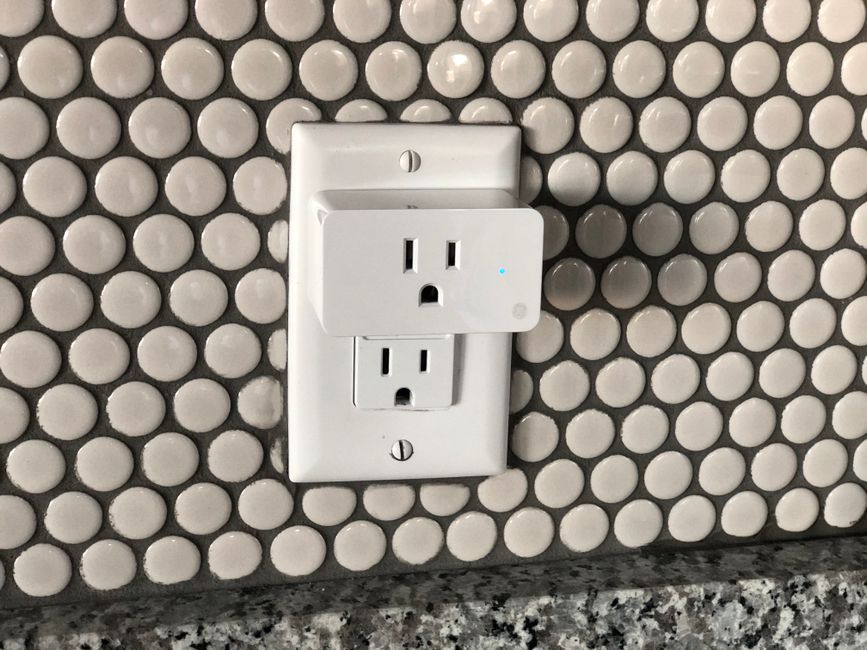
Smart plugs are the single best value entry point into a smart home. They plug into your existing UK Type G socket and make whatever’s connected to them controllable by voice, app, or schedule - no rewiring, no electrician, no replacing anything.
The TP-Link Kasa range is our budget recommendation. They use Wi-Fi (no separate hub needed), work with Alexa and Google Home, have a reliable UK app, and come in multi-packs that bring the per-plug cost down to around £7.
Use cases that pay back immediately:
- Put your kettle on a schedule so it’s boiled when your alarm goes off
- Control floor lamps or reading lights by voice
- Set a “bedtime” schedule that cuts power to the TV and living room lamps at 11pm
- Monitor energy usage (Kasa plugs have built-in energy monitoring)
Check TP-Link Kasa smart plugs on Amazon UK →Affiliate link
Budget Smart Lighting: UK Fittings Matter
One thing that catches UK buyers out: most US-market smart bulb guides assume E26 (screw) fittings everywhere. In the UK, the majority of ceiling lights use B22 bayonet cap fittings, while lamps and some pendant lights use E27 screw. Always check which fitting you need before ordering.
For B22 budget bulbs, Meross is consistently good value - around £6 per bulb in multi-packs, with Alexa, Google Home, and Apple HomeKit support out of the box. They’ve Matter support added via firmware update on recent models.
For a slightly more premium budget experience, IKEA’s Trådfri system uses a Zigbee hub (the IKEA Dirigera) which means the bulbs work locally without relying on a cloud - better reliability and privacy. The starter kit includes a bulb and a remote control, and you can expand one bulb at a time for around £8-12 each.
Shop Meross smart bulbs (B22) on Amazon UK →Affiliate link
Shop IKEA Trådfri on Amazon UK →Affiliate link
A Voice Assistant Hub
At this price point, the Amazon Echo Dot 5th Gen (around £29.99, often on sale for £19.99 during Prime Day or Black Friday) is the best value smart speaker in the UK. It sounds better than its price suggests, responds reliably to “Alexa” commands, and acts as a hub for everything else in your setup.
Alternatives at a similar price: the Google Nest Mini (~£49, but regularly discounted) gives you Google Assistant if you prefer that ecosystem.
Check the Echo Dot 5th Gen on Amazon UK →Affiliate link
LED Strips for Ambience (Optional but Worth It)
LED strips behind a TV or under a bed frame are one of the most satisfying smart home additions per pound spent. Govee strips work with Alexa and Google Home, can react to music, and can be set on schedules. A 2m strip for under £20 transforms a room’s atmosphere.
Check Govee LED strips on Amazon UK →Affiliate link
What to Skip for Now
A few things that are often pushed as “starter” smart home products that we’d recommend skipping on a budget:
- Smart thermostat: The payback is real (15-30% energy saving) but the upfront cost is £120-200. Worth it, but not the first thing to buy. We’d get the plug and lighting basics sorted first
- Smart doorbell: Great product, but typically £100+ for a good one. Leave this for phase two
- Smart hub (SmartThings, Hubitat): Not needed at this stage. Wi-Fi devices work fine without a hub and keep things simple
- Premium bulbs (Philips Hue): Excellent product, but the starter kit is £60+ before you’ve bought a single bulb. The Meross or IKEA options do 90% of what Hue does at a fraction of the price
Phase Two: What to Add Next
Once your basics are in and you’re getting value from them, the natural next steps are:
- Smart thermostat - the tado° or Hive are the best UK options for combi boilers. The energy savings typically pay back the purchase price within a year
- Smart doorbell - Ring, Arlo, or Eufy depending on whether you want a subscription, cloud-free storage, or Alexa integration
- Smart security camera - a single indoor camera gives you awareness of the home when you’re away
- More smart bulbs - once you’ve tried smart lighting in one room, you’ll want it everywhere
Getting Everything Working Together
The simplest approach: add all your devices to the Alexa app or Google Home app, create rooms (kitchen, living room, bedroom), and assign devices to rooms. Then “Alexa, turn off the living room” or “Hey Google, good night” (which can trigger a routine to turn off all lights and plug in your phone) works immediately.
If you want to go further and get everything working locally without a cloud dependency, take a look at Home Assistant - it’s free, runs on a Raspberry Pi or old PC, and is the most powerful option for a DIY smart home in the UK.
As an Amazon Associate we earn from qualifying purchases. This doesn’t affect our recommendations.
Frequently Asked Questions
Do I need to buy everything in this list at once?
No - the smart plug is genuinely the best single starting purchase if you want to try one thing first. Everything else on this list can be added incrementally as budget allows, without needing to commit to the full set upfront.
Will these budget devices still work if I move to Home Assistant later?
TP-Link Kasa, Meross and IKEA Trådfri devices all have Home Assistant integrations, so moving to a more advanced hub later doesn’t mean replacing this starter kit - it means adding local control on top of what you’ve already bought.
Related Guides
Related guides
 GUIDE
GUIDE
Setting Up Automations in the Apple Home App: A Complete UK Guide
The Apple Home app has quietly become a genuinely capable automation platform, not just a remote…
 GUIDE
GUIDE
Smart Home Gear That Actually Works in a Small Flat or Shared House (UK)
What to buy for communal areas vs your own room in a house share, and how…
 GUIDE
GUIDE
Smart TVs and Streaming Boxes for a Connected Home: UK Picks
Apple TV, Fire TV Stick and Chromecast compared for how well each plugs into your existing…