Ring vs Yale vs the Rest: UK Smart Home Security Systems Compared
According to the Office for National Statistics, there are around 300,000 domestic burglaries in England and Wales each year. The […]
Contents
- How These Systems Actually Work
- Our Top Picks
- Best Overall: Ring Alarm (2nd Gen)
- Best UK Brand: Yale IA-320 Sync
- Best for Extra Reliability: ERA Protect
- Best Budget Option: X-Sense AS05
- Self-Monitoring vs Professional Monitoring
- What to Look For
- Should I Get a Monitored Alarm?
- When a Full Alarm System Is More Than You Need
- Related Guides
- Frequently Asked Questions
- Do smart home alarms work without Wi-Fi?
- Will a smart alarm affect my home insurance?
- Can I take my alarm with me when I move?
- Do I need a landline for a smart home alarm?
- How long do the sensor batteries actually last?
- Can a burglar jam or disable these systems?
According to the Office for National Statistics, there are around 300,000 domestic burglaries in England and Wales each year. The good news is that visible deterrents - cameras, smart doorbells, and alarm systems - are highly effective at reducing the risk. The even better news is that the modern generation of wireless smart home alarms are genuinely easy to install, require no monthly contracts if you don’t want them, and send instant alerts to your phone the moment something triggers.
This guide covers the best smart home security alarm systems available in the UK right now - DIY wireless systems that you install yourself, monitor via an app, and can take with you when you move. We’ve not included professional installation systems that require a long-term contract.
How These Systems Actually Work
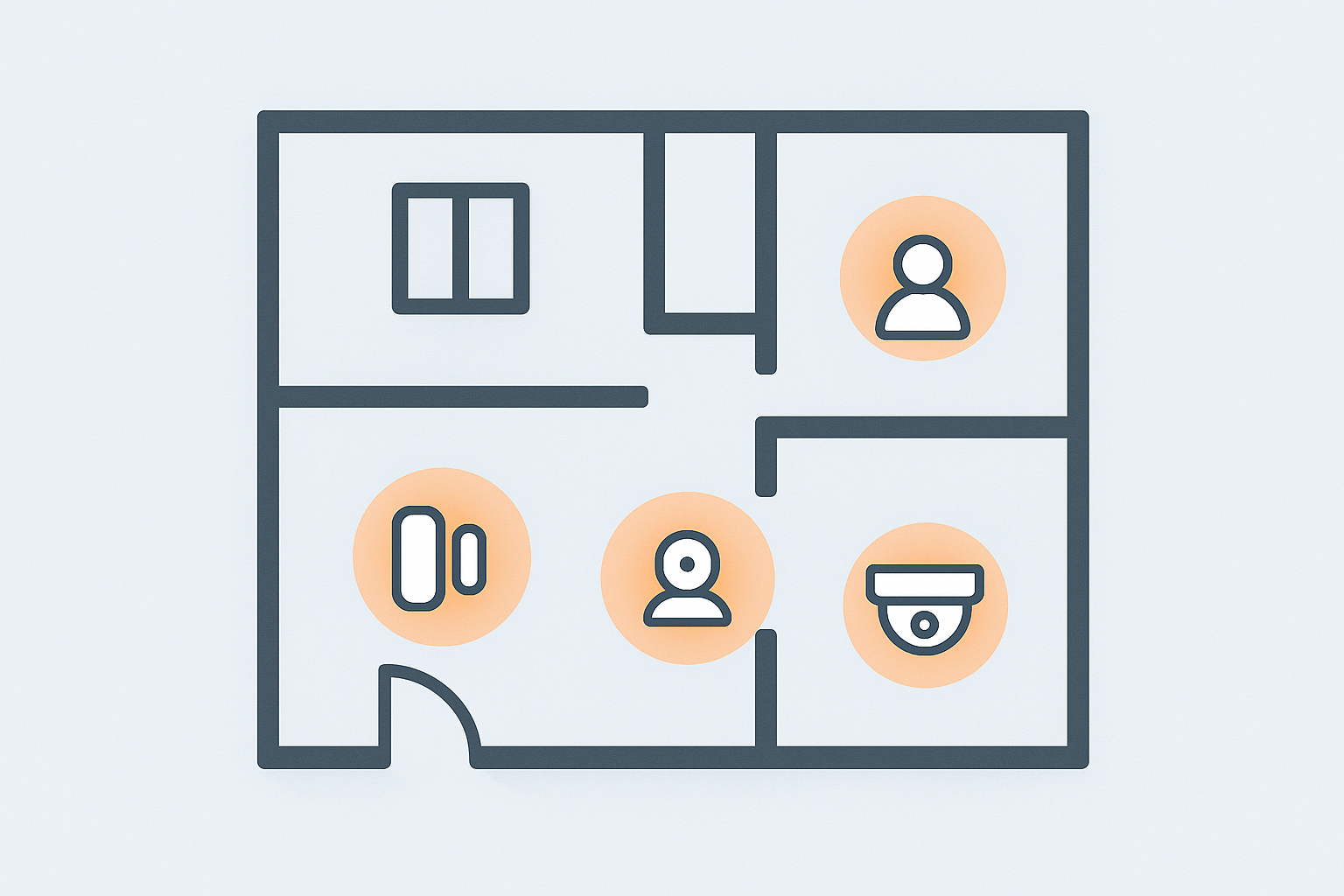
All four kits here use a base station/hub connected to your router, with sensors communicating back to it over a dedicated low-power radio - typically a proprietary sub-1GHz frequency (often around 868MHz in the UK and EU) rather than Wi-Fi or Zigbee, chosen specifically because it penetrates walls and travels further than Wi-Fi at the low data rates an alarm sensor actually needs. Door/window contact sensors work via a simple magnetic reed switch - one half on the frame, one on the door - that breaks contact the instant the gap opens, while PIR (passive infrared) motion sensors detect the heat signature of a moving body crossing their field of view, which is why placement matters: a PIR aimed across a room rather than along a likely walking path gives a faster, more reliable trigger. All the systems reviewed here also include tamper detection - removing a sensor from its mount or opening the base station’s case triggers an alert independent of the main sensors, which matters since a sensor an intruder can simply unscrew and disable defeats the point otherwise.
Our Top Picks
- Ring Alarm 8-Piece Kit (2nd Gen) - Best overall; slick app, Alexa integration, optional monitoring
- Yale IA-320 Sync - Best UK brand; 200m range, no monthly fee, integrates with Yale locks
- ERA Protect - Best reliability; dual Wi-Fi + SIM backup, BSI Kitemark certified
- X-Sense AS05 - Best budget; affordable wireless kit with app alerts
Best Overall: Ring Alarm (2nd Gen)
The Ring Alarm 8-piece kit is the most complete out-of-the-box smart home security system available in the UK. The kit includes a base station, keypad, two contact sensors for doors and windows, a motion detector, and a range extender. Setup takes around 30 minutes with no tools required - sensors attach with adhesive tape and the base station plugs into the router. The Ring app is polished and intuitive, letting you arm, disarm, and check status from anywhere. It works natively with Alexa, so you can arm the system with a voice command.
Ring offers optional professional monitoring through its Ring Protect Plus plan (check the Ring website for current UK pricing) with no long-term commitment - you pay month to month and can cancel at any time. Without a plan, you still receive instant smartphone notifications when sensors are triggered. The system integrates seamlessly with Ring doorbells and cameras if you want to build out a broader security setup. The main caveat is that Ring is cloud-dependent - without internet, you won’t get app alerts (though the siren still sounds locally). Some users are also mindful of Ring’s ownership by Amazon and the associated data considerations.
Best UK Brand: Yale IA-320 Sync
Yale is one of the most trusted names in UK home security, and the IA-320 Sync Smart Home Alarm brings that heritage into the connected era. The 6-piece kit - hub, external siren, door/window contact, two PIR motion detectors, and keypad - is designed specifically for UK homes and wiring conventions. The 200m wireless range is a significant practical advantage: you can cover a detached garage, outbuilding, or garden shed on the same system without a range extender.
There’s no monthly fee - Yale’s self-monitoring via the app is included in the purchase price. Geofencing lets the system arm automatically when you leave home and disarm when you return. It integrates with Yale’s own smart locks (so the alarm arms when you lock the door) and with Philips Hue (the lights flash when the alarm triggers). For those who prefer a UK brand with a long track record in physical security, the IA-320 Sync is the natural choice.
Best for Extra Reliability: ERA Protect
The ERA Protect is the choice for households where reliability is paramount. Its standout feature is dual-path communication: the system uses your broadband connection as primary, but automatically falls back to a built-in SIM card if the internet goes down. This matters because broadband outages - or a burglar cutting your phone line - won’t disable the alarm’s ability to notify you. The ERA Protect is also BSI IoT Kitemark certified, an independent standard that verifies both physical security and data protection. It’s expandable to up to 96 accessories and works with Alexa and Google Home.
Best Budget Option: X-Sense AS05
The X-Sense AS05 offers a credible smart alarm system at a significantly lower price point than the Ring or Yale options. The kit includes a base station, two door alarms, a motion sensor, and a keypad - enough to protect the main entry points of a typical flat or small house. App alerts work over Wi-Fi, and it’s compatible with Alexa. It’s a reasonable choice for renters who want basic smart protection, students in shared accommodation, or anyone who wants to trial a smart alarm without a significant outlay.
Self-Monitoring vs Professional Monitoring
With self-monitoring, you receive an alert on your phone when the alarm is triggered, and it’s up to you to decide whether to call the police, check a camera feed, or investigate yourself. There’s no monthly fee. This works well for the majority of households, particularly those where one person is almost always reachable on their phone.
Professional monitoring means a third-party call centre receives the alert, attempts to contact you, and can dispatch the police on your behalf if they can’t reach you. This is particularly useful if you travel frequently or have periods when you’re genuinely unreachable. Ring offers this through Ring Protect Plus; third-party services like Alarm.com also support some systems. Costs are typically £10-£25 per month. Worth knowing: for police to give a monitored alarm a guaranteed priority response in the UK, the system and the monitoring centre generally need to meet NSI (National Security Inspectorate) or SSAIB accreditation and be registered under a police-recognised Unique Reference Number (URN) scheme - a DIY kit’s own-brand “professional monitoring” plan, including Ring Protect Plus, typically doesn’t carry this accreditation, so it functions more as a fast alert-and-callback service than a guaranteed police dispatch. Some home insurers offer reduced premiums for monitored alarms regardless - worth checking with your provider what standard they actually require for a discount.
What to Look For
- Wireless range: Important if you want to cover outbuildings or a large property. Yale’s 200m range leads the field.
- Backup SIM: ERA Protect is the only mainstream option with a built-in SIM for broadband outage resilience.
- Monitoring options: Check whether no-contract monitoring is available and at what cost, and whether it carries NSI/SSAIB accreditation if guaranteed police response matters to you.
- Integration: Does it work with your other smart home devices - cameras, doorbells, smart locks, Alexa/Google?
- Easy installation: All the systems here are DIY-friendly. No drilling or wiring is required.
- Expandability: Can you add more sensors later? Important if your needs change.
- Siren volume: UK domestic alarm sirens typically sit around 100-110dB - genuinely startling at close range, comparable to a loud power tool - which is the point, both as a deterrent and to alert neighbours.
Should I Get a Monitored Alarm?
For most UK households, self-monitoring is perfectly adequate - smartphone alerts are fast, and the vast majority of us are reachable by phone. However, if your insurer offers a meaningful discount for a monitored system with police response capability, the monthly fee may pay for itself. Always check with your insurer before deciding, and confirm that any alarm you choose meets the standards they require.
When a Full Alarm System Is More Than You Need
Worth being honest about this: a small flat with one main entry point, particularly in a building with its own communal entry security, often doesn’t need a full multi-sensor alarm kit - a good video doorbell alone covers the most common entry point and gives you visual verification a plain door/window sensor can’t. A full kit earns its cost specifically once you have multiple accessible entry points (a house rather than a flat), a garden or outbuilding worth covering, or you’re specifically trying to satisfy an insurer’s requirement for a monitored system.
Related Guides
Frequently Asked Questions
Do smart home alarms work without Wi-Fi?
Most require Wi-Fi for app notifications - without internet you won’t receive alerts on your phone. However, the siren will still sound locally even without Wi-Fi. The ERA Protect is the exception: its built-in SIM means the alarm can still send notifications even if your broadband is down.
Will a smart alarm affect my home insurance?
It may. Some insurers offer discounts for alarm systems, particularly monitored ones meeting NACOSS or NSI standards. Always declare your alarm system to your insurer, and ask specifically about any discount available. Undeclared security improvements can sometimes affect claims.
Can I take my alarm with me when I move?
Yes - all the systems in this guide are wireless and entirely self-contained. Sensors use adhesive mounts or screws that leave minimal marks. Ring and Yale are specifically designed with renters and movers in mind.
Do I need a landline for a smart home alarm?
No. All modern smart alarms connect via your broadband Wi-Fi connection. No telephone landline is needed. The ERA Protect additionally uses a SIM card as a backup, but a landline is not required by any of the systems in this guide.
How long do the sensor batteries actually last?
Most door/window contact sensors and PIR motion detectors on these systems run 1-2 years on their included batteries under normal use, since they only transmit briefly on a state change rather than continuously. All four systems send a low-battery warning through the app well before a sensor actually dies, but it’s worth a manual check across all sensors every few months rather than relying purely on that notification arriving.
Can a burglar jam or disable these systems?
RF jamming is technically possible against any wireless alarm, but it’s a niche, deliberate attack rather than something opportunistic burglars typically attempt, and tamper detection on the sensors and base station (which triggers independently if a device is physically removed or opened) covers the far more common scenario of someone trying to disable a sensor by hand. For most UK households, the realistic risk profile these systems are designed for - opportunistic entry via a door or window - is exactly what they’re effective against.
Related guides
 GUIDE
Should You Put Smart Home Devices on a Separate VLAN? A UK Guide
Every smart home device on your network is, from a security standpoint, a small computer running…
 GUIDE
Smart Home Gear That Actually Works in a Small Flat or Shared House (UK)
What to buy for communal areas vs your own room in a house share, and how…
 GUIDE
Smart TVs and Streaming Boxes for a Connected Home: UK Picks
Apple TV, Fire TV Stick and Chromecast compared for how well each plugs into your existing…