Connected Smoke and CO Alarms UK: Worth the Upgrade?
Smart smoke alarms send alerts to your phone, interconnect wirelessly, and can trigger other smart home devices. Here are the best options for UK homes.
Contents
- UK Regulations: What You Need to Know
- Ionisation vs Optical: The Sensor Type Behind the Marketing
- Best Overall: Google Nest Protect (2nd Gen)
- Best UK Brand: Aico Ei650iRF
- Best Battery Smart Alarm: FireAngel Pro Connected
- Interlinking Across Brands: The Gotcha
- Don’t Forget Carbon Monoxide
- Our Recommendation
- Frequently Asked Questions
- How often should I test a smart smoke alarm?
- Do smart smoke alarms replace the need for a monitored fire alarm system?
- Should I use ionisation or optical alarms in my home?
- Can I mix Nest Protect and Aico or FireAngel alarms in the same house and have them interlink?
- Am I legally required to have interlinked alarms if I own my home in Scotland?
- Related Guides
A smart smoke alarm does everything a standard alarm does - but also sends a notification to your phone when it triggers, even when you’re away from home. Some can tell you which room the alarm is in, distinguish between smoke and carbon monoxide, and link wirelessly so that an alarm in one room triggers alarms throughout the house. For a UK home, that’s a meaningful upgrade.
UK Regulations: What You Need to Know
UK law (Building Regulations Part B and Scottish Building Standards) requires at least one smoke alarm on every floor of a home. Since January 2022 in England, all new builds must have mains-powered, interconnected smoke alarms with a CO alarm near any gas appliance. For existing homes, battery-powered alarms are still legal and widely used.
Scotland’s rule is genuinely different and worth knowing if you’re north of the border: since February 2022, every home in Scotland - not just new builds, existing homes too - is legally required to have interlinked smoke alarms (one in the living room and one in every hallway/landing), a heat alarm in the kitchen, and a carbon monoxide alarm if there’s a carbon-fuelled appliance or a flue passing through a room. This is a much broader requirement than England’s new-build-only rule, and it applies to owner-occupiers as well as landlords - if you own a home in Scotland and haven’t checked your alarms meet this standard, it’s worth verifying rather than assuming an older setup is compliant.
For landlords across the UK specifically, the Smoke and Carbon Monoxide Alarm (England) Regulations (updated 2022) require a working smoke alarm on every storey used as living accommodation and a CO alarm in any room with a fixed combustion appliance (excluding gas cookers) - checked at the start of every new tenancy. This applies regardless of whether the alarms are “smart” - a standard compliant alarm satisfies the legal requirement - but a smart, interconnected system with phone alerts makes it considerably easier for a landlord to demonstrate ongoing compliance and catch a dead battery or fault remotely rather than only at inspection.
Key standards to look for:
- BS EN 14604 - the UK/EU standard for smoke alarms
- BS EN 50291 - the standard for carbon monoxide (CO) alarms
- Kitemark certification - a BSI quality mark, worth looking for
All products in this guide meet UK standards. Always check the certification before buying any smoke or CO alarm.
Ionisation vs Optical: The Sensor Type Behind the Marketing
Worth understanding before choosing where to fit which alarm: smoke detectors use one of two underlying sensor technologies, and picking the wrong one for a given room is the single most common cause of false alarms. Ionisation sensors (like the Aico Ei650iRF below) react fastest to small, fast-burning particles typical of a genuine flaming fire, but are more prone to false triggers from cooking fumes and steam - not the right choice directly outside a kitchen. Optical (photoelectric) sensors, used in Nest Protect and most FireAngel models, react faster to the dense smoke of a smouldering fire (upholstery, electrical faults) and are considerably less prone to nuisance alarms from cooking or steam, making them the better choice for a landing directly outside a kitchen or bathroom. The general rule fire safety guidance follows: optical near kitchens and bathrooms, ionisation acceptable elsewhere, and a combined dual-sensor alarm where you want the best of both in a single unit if budget allows.
Best Overall: Google Nest Protect (2nd Gen)
The Nest Protect remains the gold standard for smart smoke and CO detection. It detects both smoke and carbon monoxide in a single unit, speaks aloud to tell you what type of alarm it is and which room it’s in (“Heads up, there’s smoke in the kitchen”), and sends alerts to the Google Home app on your phone. It uses a photoelectric (optical) sensor, which is worth knowing given the section above - it’s a genuinely sensible choice for a kitchen-adjacent hallway specifically because it’s less prone to cooking-fume false alarms than an ionisation unit.
Multiple Nest Protects interconnect wirelessly - trigger one and all of them sound. There’s also a Nightly Promise feature: the LED ring glows green when you turn off the lights to confirm everything is working. A Pathlight feature uses the LED to light your way at night.
Available in wired (230V mains) and battery versions. The battery version uses six AA batteries; Google claims up to 10 years. It meets BS EN 14604 and BS EN 50291. Price is around £109 per unit - significantly more expensive than standard alarms, but the feature set justifies it for most smart home users.
Check Nest Protect price on Amazon UK →Affiliate link
Best UK Brand: Aico Ei650iRF
Aico is a UK manufacturer based in Oswestry, and their alarms are widely specified by UK housing associations, fire services, and local authorities. The Ei650iRF is a mains-powered ionisation smoke alarm with RadioLINK+ wireless interconnection - meaning up to 12 Aico alarms can link together without any wiring between them. Being ionisation rather than optical, it’s best placed away from kitchens and bathrooms per the sensor guidance above - Aico’s own range includes optical and heat-only variants specifically for those rooms if you’re building a whole-house system.
The Ei650iRF connects to the Aico HomeLINK gateway, which gives you phone alerts, environmental monitoring, and a log of alarm events. It doesn’t have the same consumer-friendly app as Nest Protect, but it’s the choice of professionals for good reason: extremely reliable, built to UK standards, and backed by a 10-year guarantee.
Aico alarms require a mains connection (with a battery backup), which means they’re best suited to new builds or renovations where wiring is accessible. For battery-only retrofit, Nest Protect or FireAngel are more practical.
Check Aico Ei650iRF price on Amazon UK →Affiliate link
Best Battery Smart Alarm: FireAngel Pro Connected
FireAngel is another British manufacturer, and their Pro Connected range offers wireless interconnection and app connectivity in a battery-powered unit - making it the most practical choice for retrofitting smart alarms into an existing home without electrical work.
The Pro Connected alarm uses FireAngel’s Wi-Safe 2 wireless protocol to interconnect up to 50 devices, and the Gateway (sold separately) connects the system to your home Wi-Fi for phone alerts via the FireAngel app. The app shows which alarm triggered and logs event history.
FireAngel also makes combination smoke and CO alarms in this range, which is worth considering if you have gas appliances.
Check FireAngel Pro Connected on Amazon UK →Affiliate link
Interlinking Across Brands: The Gotcha
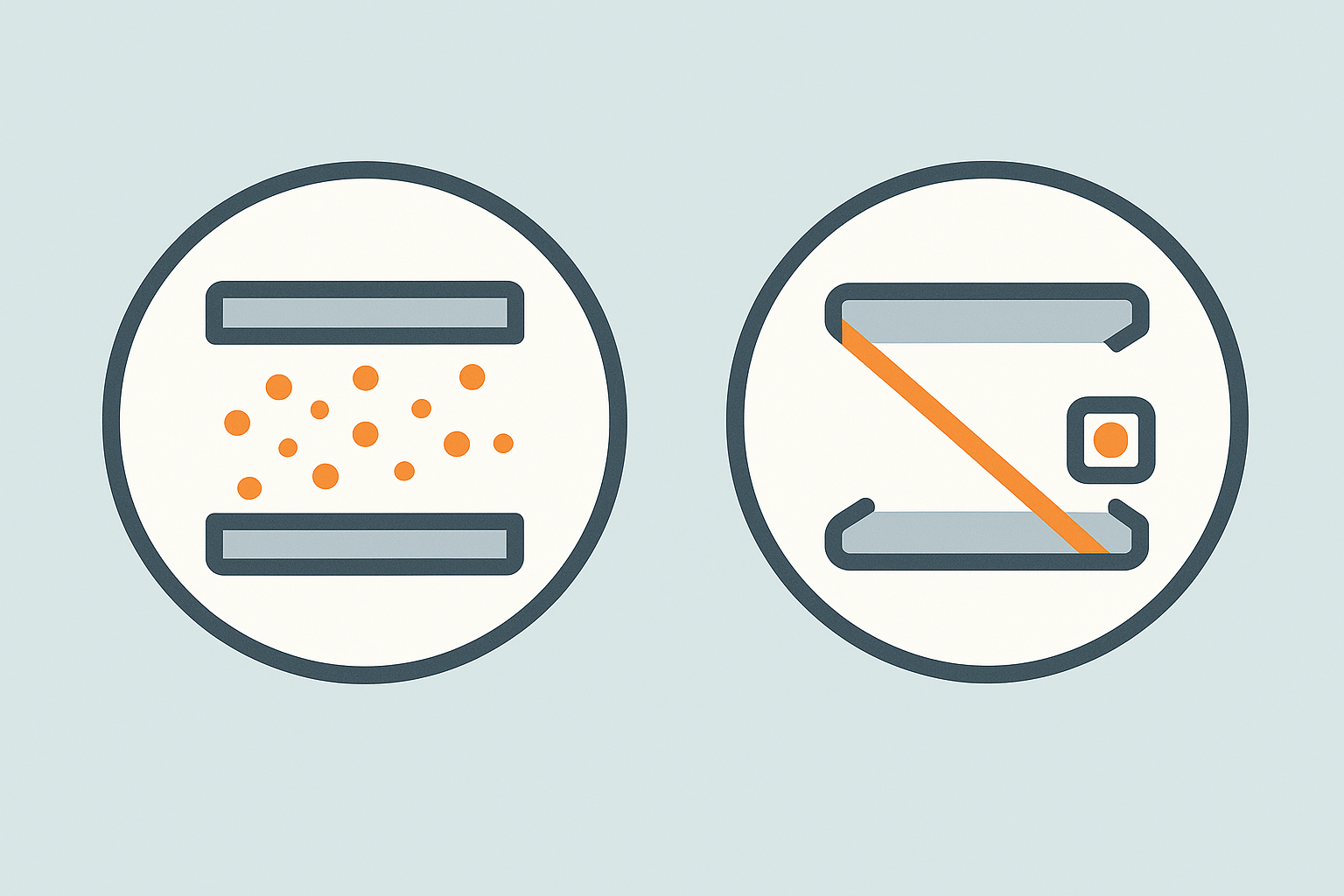
Worth flagging clearly since it catches people out when building a mixed system: each manufacturer’s wireless interlinking protocol is proprietary and doesn’t talk to the others. Aico’s RadioLINK+, FireAngel’s Wi-Safe 2, and Nest Protect’s own wireless system are three separate, mutually incompatible networks - you cannot interlink a Nest Protect with an Aico alarm and have one trigger the other. If you want a genuinely whole-house interlinked system, every alarm in it needs to be the same manufacturer’s interlinking-compatible range (checking the specific model, since not every alarm within a brand’s range supports interlinking either). Mixing brands means running two or more entirely separate alarm systems in the same house, each interlinked internally but blind to the other.
Don’t Forget Carbon Monoxide
If your home has any gas appliance - boiler, hob, gas fire - you should have a CO alarm within 1-3 metres of it. CO is odourless and colourless, and kills around 60 people in the UK every year. The Nest Protect combines smoke and CO detection in one unit. If you go with a smoke-only alarm, add a dedicated CO alarm near your boiler.
Shop CO alarms on Amazon UK →Affiliate link
Our Recommendation
For most smart home users: Nest Protect. The combination of smoke + CO detection, voice alerts, phone notifications, and wireless interconnection in one well-designed package is hard to beat. For new builds or professional-grade reliability: Aico with HomeLINK. For retrofitting without electrical work: FireAngel Pro Connected.
Whatever you choose, test your alarms monthly and replace them every 10 years - or per the manufacturer’s guidance. Even smart alarms have a sensor lifespan.
As an Amazon Associate we earn from qualifying purchases. This doesn’t affect our recommendations.
Frequently Asked Questions
How often should I test a smart smoke alarm?
Monthly, the same as any standard alarm - most smart alarms have a test button or a “test” option in their companion app, and testing regularly confirms both the sensor and the phone-notification path are actually working, not just the audible alarm itself.
Do smart smoke alarms replace the need for a monitored fire alarm system?
For most homes, no - a monitored system with a direct line to the fire service is a different tier of protection, typically reserved for larger properties, HMOs, or specific insurance/business requirements. A smart alarm’s phone notification relies on you seeing and acting on it yourself.
Should I use ionisation or optical alarms in my home?
As a rule of thumb: optical (photoelectric) alarms near kitchens and bathrooms where cooking fumes and steam would otherwise trigger frequent false alarms on an ionisation unit; ionisation is fine in bedrooms, hallways and living rooms away from those sources. A dual-sensor alarm, or Nest Protect’s photoelectric-only approach, sidesteps needing to choose per room.
Can I mix Nest Protect and Aico or FireAngel alarms in the same house and have them interlink?
No - each brand’s wireless interlinking is proprietary and incompatible with the others, as covered above. A genuinely interlinked whole-house system needs to be a single manufacturer’s compatible range throughout.
Am I legally required to have interlinked alarms if I own my home in Scotland?
Yes, since February 2022, all homes in Scotland - owner-occupied as well as rented - must have interlinked smoke alarms in the living room and every hallway/landing, a heat alarm in the kitchen, and a CO alarm if there’s a carbon-fuelled appliance or flue. This is broader than the England/Wales requirement, which currently applies fully only to new builds and rented properties.
Related Guides
Related guides
 GUIDE
Should You Put Smart Home Devices on a Separate VLAN? A UK Guide
Every smart home device on your network is, from a security standpoint, a small computer running…
 GUIDE
Smart Home Gear That Actually Works in a Small Flat or Shared House (UK)
What to buy for communal areas vs your own room in a house share, and how…
 GUIDE
Smart TVs and Streaming Boxes for a Connected Home: UK Picks
Apple TV, Fire TV Stick and Chromecast compared for how well each plugs into your existing…