Smart Light Switches UK 2026: The Complete Buyer’s Guide
Smart bulbs get most of the attention when people start building a smart home, but there’s a strong argument for […]
Contents
- The UK Wiring Problem: No Neutral Wire
- How to Check if You Have a Neutral Wire
- No-Neutral Options
- Tapo S210 (Battery-Powered - Easiest Install): View on Amazon
- SONOFF ZBMINIL2 (Zigbee, In-Wall): View on Amazon
- Philips Hue Tap Dial Switch: View on Amazon
- If You Have a Neutral Wire: SONOFF T0UK
- Smart Switches vs Smart Bulbs: Which Should You Choose?
- What to Look For
- Related Guides
- Frequently Asked Questions
- Can I install a smart switch myself in the UK?
- Do smart switches work with normal bulbs?
- What is the best no-neutral smart switch for UK homes?
- Will a smart switch work with a 2-way lighting circuit?
Smart bulbs get most of the attention when people start building a smart home, but there’s a strong argument for smart switches instead - or alongside them. Switches mean any bulb becomes controllable, guests don’t need to know which switch to flick or which app to open, and you keep the physical switching behaviour that most people expect from a light. The complication in the UK is that our wiring conventions create some genuine challenges.
This guide explains those challenges honestly, walks through the best options for different situations, and helps you decide whether a smart switch or a smart bulb is the right answer for your home.
The UK Wiring Problem: No Neutral Wire
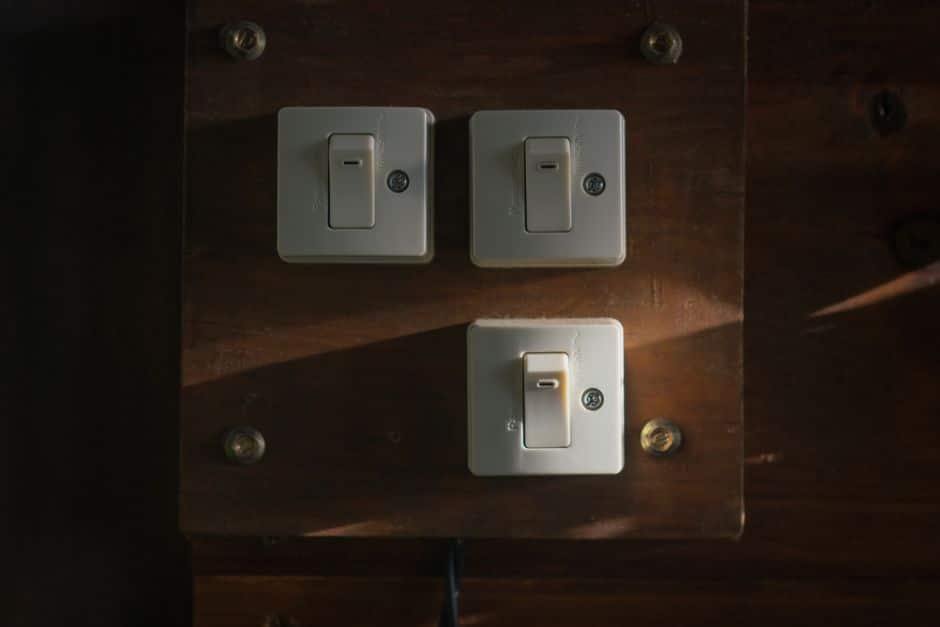
In most UK homes, the wiring at a light switch contains only two conductors: the live wire and the switched live wire. There is no neutral wire present at the switch - the neutral goes directly to the light fitting. This is in contrast to North American wiring (and some newer UK builds) where a neutral is present at every switch.
Many smart switches - particularly those from US brands - require a neutral wire to power their electronics. Without one, you’re limited to a smaller selection of options designed specifically for the no-neutral scenario. If you’re in a newer UK property built after roughly 2000, or if an electrician has rewired your lighting circuits, you may well have a neutral at the switch - in which case your options are considerably broader.
How to Check if You Have a Neutral Wire
- Turn off the circuit at your consumer unit (fuse box) - do not just switch the light off at the wall.
- Carefully unscrew your existing switch plate and pull it away from the wall.
- Count the wires entering the switch. If you see only two wires (brown/red = live, blue/grey = switched live), you have no neutral.
- If you see three or more wires - including a blue or grey wire that is not the switched live - you likely have a neutral present.
- When in doubt, engage a qualified electrician to check for you before buying any switch.
No-Neutral Options
If you have no neutral wire at your switch, these are your realistic options:
Tapo S210 (Battery-Powered - Easiest Install): View on Amazon
The TP-Link Tapo S210 requires no wiring whatsoever. It runs on two AAA batteries lasting over a year, and you simply stick it over your existing switch (using the included adhesive mount) or screw it to any flat surface. It connects to a Tapo Hub (required, sold separately) and then to Alexa and Google Home. The app lets you set schedules and control lights remotely. The main limitations are that it cannot dim lights and requires the Tapo Hub - but for renters or anyone who doesn’t want to do any electrical work at all, it’s by far the easiest path to smart switching.
SONOFF ZBMINIL2 (Zigbee, In-Wall): View on Amazon
The SONOFF ZBMINIL2 is a Zigbee smart relay that fits inside your existing switch backbox behind the switch plate. It requires no neutral wire - it works with only the live and switched live. The catch is that it needs a Zigbee hub to operate: compatible options include the SONOFF ZBBridge-P, Samsung SmartThings, or Home Assistant with a Zigbee stick. It supports 2-way switching (important for hallways and staircases where there’s a switch at each end). More technical to install than the Tapo S210, but once in place it’s solid and discreet - your existing switch plate stays in place and looks unchanged.
Philips Hue Tap Dial Switch: View on Amazon
The Philips Hue Tap Dial Switch occupies a different category entirely - it’s not a mains switch but a wireless button controller that sticks to any surface. What makes it remarkable is that it requires no batteries and no wiring: it harvests the kinetic energy from pressing the button to generate a wireless signal. Four programmable buttons let you control different rooms or scenes, and the dial dims your Hue lights up or down.
The Tap Dial Switch works exclusively with Philips Hue lights - it’s not a general smart switch. But if you’re already in the Hue ecosystem, it solves the switch problem elegantly. Stick one next to your existing switch so the physical switching habit is preserved, and press it to trigger your Hue scenes. It can coexist with your standard wall switch as long as you understand that the standard switch controls the power to the bulb (and if the power is cut, the Hue bulb loses its smart functions).
If You Have a Neutral Wire: SONOFF T0UK
If your switch wiring includes a neutral, the world of smart switches opens up considerably. The SONOFF T0UK2C is a UK-format touch switch that fits a standard UK backbox, requires live and neutral, and connects via Wi-Fi with no hub required. It works with Alexa, Google Home, and the eWeLink app for remote control and scheduling. Available in 1, 2, and 3 gang versions, it replaces your existing switch plate and gives you a clean, modern touchscreen interface. For homes with neutral wiring, this is a straightforward and affordable upgrade.
Smart Switches vs Smart Bulbs: Which Should You Choose?
- Choose smart switches if: you have non-standard or fixed fittings (downlights, spotlights, fluorescent tubes), you want guests to use the lights normally, or you want to control standard bulbs rather than replacing them all.
- Choose smart bulbs if: you want colour-changing capability, you’re using standard lamp sockets (E27/B22), or you want to start without any electrical work at all.
- Consider both if: you have a mix - smart bulbs in lamps and feature lights, smart switches for ceiling circuits with multiple downlights.
What to Look For
- Neutral wire requirement: Check before you buy. It’s the most important compatibility question.
- Hub dependency: Wi-Fi switches (SONOFF T0UK) need no hub. Zigbee switches (ZBMINIL2) need a Zigbee hub. Battery switches (Tapo S210) need a Tapo Hub.
- Protocol: Wi-Fi is simplest; Zigbee is more reliable and works offline; Matter is the future-proof standard.
- Dimming support: Not all smart switches support dimming. Check the spec and ensure your bulbs are dimmable too.
- 2-way switching: Essential for circuits where two switches control the same light. The SONOFF ZBMINIL2 supports this; not all switches do.
- Voice assistant compatibility: All switches here work with Alexa and Google Home.
Related Guides
- Best Smart Bulbs UK 2026
- How to Set Up Philips Hue UK
- Philips Hue vs IKEA TRÅDFRI
- Best Smart Home Starter Kit UK 2026
Frequently Asked Questions
Can I install a smart switch myself in the UK?
Yes, if you’re comfortable with basic electrical work and confident about safely isolating the circuit at the consumer unit. Replacing a switch plate is within the DIY capability of most competent householders. However, if the work involves the consumer unit itself, running new cables, or you’re in any doubt about what you’re doing, use a qualified electrician. It’s not worth the risk.
Do smart switches work with normal bulbs?
Yes - a mains smart switch like the SONOFF T0UK controls the power to the light circuit, so any bulb in the fitting will be switched on and off by it. You don’t need smart bulbs. The exception is the Philips Hue Tap Dial, which only controls Hue smart bulbs specifically.
What is the best no-neutral smart switch for UK homes?
The Tapo S210 (battery-powered, no wiring at all) is the easiest option and ideal for renters or those who want zero electrical work. The SONOFF ZBMINIL2 is the better choice if you want a proper in-wall relay with no neutral required - it’s more technical but more discreet and reliable once installed.
Will a smart switch work with a 2-way lighting circuit?
It depends on the switch. The SONOFF ZBMINIL2 explicitly supports 2-way switching. Many other smart switches do not. This is a critical consideration for hallways, staircases, or any room where two physical switches control the same light - check the specification carefully before purchasing.
Related guides
 GUIDE
Smart Home Gear That Actually Works in a Small Flat or Shared House (UK)
What to buy for communal areas vs your own room in a house share, and how…
 GUIDE
Smart TVs and Streaming Boxes for a Connected Home: UK Picks
Apple TV, Fire TV Stick and Chromecast compared for how well each plugs into your existing…
 GUIDE
Smart Dehumidifiers UK: Which Ones Are Actually Worth Automating
Meaco, Pro Breeze and EcoAir smart dehumidifiers compared for tackling UK damp and condensation, plus a…