Smart Home Security for Holiday Homes & Second Properties UK
No one living there day to day changes what actually matters - cellular backup, frost alerts and remote monitoring for a property you can't just pop round to check.
Contents
- The Core Problem: No Reliable Wi-Fi Guarantee
- Cellular-Backup Cameras and Routers
- The Power Cut Blind Spot Wi-Fi Backup Doesn’t Cover
- Frost and Freeze Alerts
- Setting a Sensible Alert Threshold
- Water Leak Detection Is Non-Negotiable Here
- External Security: Lighting and Motion Detection
- Alerting Someone Who Can Actually Respond
- Occupancy Monitoring Without Cameras Inside
- Insurance Considerations
- Frequently Asked Questions
- How often should someone physically check an unoccupied holiday home?
- Is cellular backup really necessary, or is it overkill?
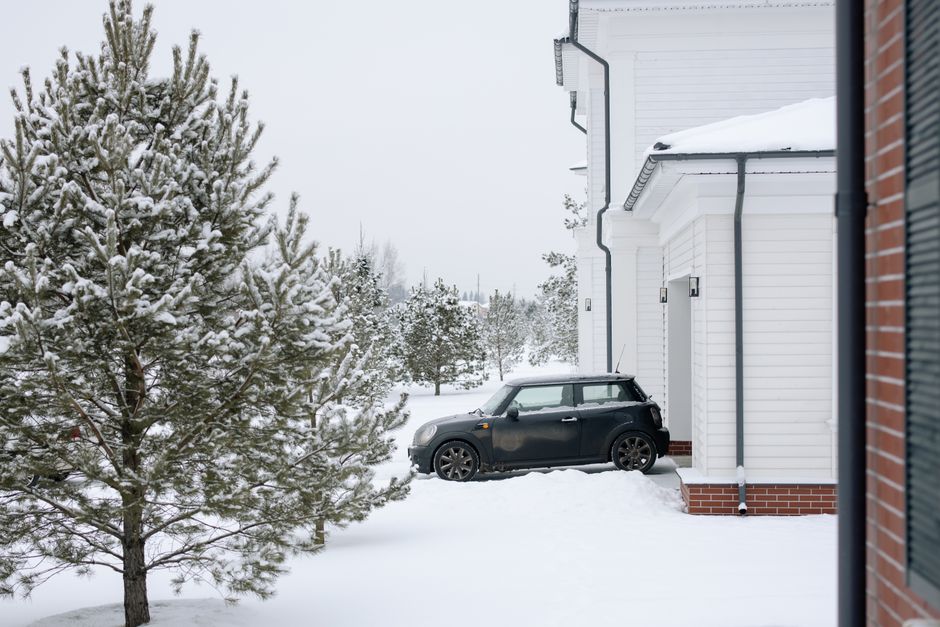
A holiday home, second property, or long-vacant house between lets has a different risk profile from a home someone lives in daily. There’s no one there to notice a dripping pipe, an alarm going off, or the heating failing in a cold snap - often for weeks at a time. Standard smart home security advice mostly assumes daily presence; this is about the specific gaps that matter when nobody’s checking in person.
The Core Problem: No Reliable Wi-Fi Guarantee
Most smart home security assumes a stable internet connection and someone nearby to notice if it drops. An unoccupied property can lose broadband for weeks without anyone knowing - a router reboot that fails, an ISP outage, a power cut - silently disabling every Wi-Fi dependent camera and sensor at exactly the point they’re needed most. This is why cellular backup matters more here than almost anywhere else in a smart home setup.
Cellular-Backup Cameras and Routers
Some security cameras (Reolink’s cellular-enabled range among them) include a SIM card slot as a fallback if the primary Wi-Fi connection drops, sending alerts over the mobile network instead of going silent. Alternatively, a dedicated 4G/5G backup router that automatically takes over if the main broadband connection fails keeps the whole property’s smart devices connected, not just one camera - a more robust (if pricier) solution for a property that’s genuinely unattended for long stretches.
Check 4G Backup Routers on Amazon UK →Affiliate link
The Power Cut Blind Spot Wi-Fi Backup Doesn’t Cover
Worth being clear about a distinction that’s easy to miss: a cellular-backup camera or router solves the problem of the internet connection failing while the property still has mains power. It does nothing if the property loses power entirely, since the camera, router and every Wi-Fi device on the property go dark together regardless of what backup connectivity they have. For genuinely unattended properties, a separate battery-backed sensor with its own cellular or LoRaWAN radio (rather than relying on the property’s Wi-Fi at all) is the only way to get a power-loss alert while the power is actually out - the alternative is a smart plug that simply reports “last seen” timestamps to a cloud service, so a gap in reporting itself becomes the alert, even though it’s a cruder signal than a dedicated power-loss sensor. Either is worth adding specifically because a power cut and an internet outage are different failure modes that call for different detection.
Frost and Freeze Alerts
A burst pipe in an unoccupied property over winter can run undetected for weeks, causing far more damage than the same leak in an occupied home. A temperature sensor (Aqara and Eve both make suitable battery sensors) set to alert if the property’s internal temperature drops toward freezing gives an early warning that heating has failed - paired with a smart thermostat kept at a frost-protection minimum, this is one of the highest-value setups for any property standing empty over winter.
Check Temperature Sensors on Amazon UK →Affiliate link
Setting a Sensible Alert Threshold
Setting the frost alert to trigger exactly at 0°C is a common mistake, and it triggers too late to be genuinely useful. Pipe damage risk starts as internal ambient temperature approaches freezing, not once it’s already there, particularly in an uninsulated loft or an exterior wall run - by the time a sensor at 0°C actually fires, a poorly insulated pipe run elsewhere in the property may already be at risk. Setting the alert threshold at 5°C instead gives a genuine early-warning buffer while heating failure or a stuck thermostat is still fixable remotely (via a smart thermostat) or by dispatching a keyholder, rather than after a pipe has already started to freeze. It’s also worth deliberately avoiding an unnecessarily low threshold purely to dodge false alarms - a genuinely cold but functioning property (frost-protection heating set correctly) will occasionally dip toward 5-7°C on the coldest nights without anything being wrong, and that’s a fine trade-off for catching a real heating failure early rather than a reason to loosen the threshold back toward 0°C.
Water Leak Detection Is Non-Negotiable Here
Everything true about water leak sensors for an occupied home applies more strongly to an unoccupied one - a leak discovered on day one instead of week three is the entire point of fitting these, and for a genuinely unattended property, it’s arguably the single highest-value device on this list.
External Security: Lighting and Motion Detection
An unoccupied property benefits from exterior motion-triggered lighting and a visible camera more than an occupied one, since there’s no other deterrent (cars coming and going, lights on in the evening) suggesting someone’s home. Scheduling interior lights to switch on and off on a randomised pattern, alongside genuine exterior lighting and camera coverage, helps a holiday home look less obviously empty from the street.
Alerting Someone Who Can Actually Respond
An alert is only useful if it reaches someone who can act on it - a neighbour with a spare key, a local property management contact, or a keyholder service, depending on how far away you are from the property day to day. Set up notification escalation (a first alert to you, a second to a local contact if unacknowledged) rather than relying on a single phone notification that might go unseen for days if you’re not checking your phone from a different time zone.

Occupancy Monitoring Without Cameras Inside
For a holiday let specifically, noise and occupancy sensors (Minut is the established name here) flag an unauthorised gathering or unexpected activity without recording audio or video - see our landlord smart home guide for more on this category, which applies directly to short-let holiday properties too.
Insurance Considerations
Many UK home insurance policies have specific clauses around unoccupied properties - often requiring the water supply to be turned off, or heating maintained at a minimum temperature, if the property is empty beyond a set number of consecutive days. Check your specific policy wording, and see our smart home and insurance guide for how leak and security devices can affect premiums generally.
Frequently Asked Questions
How often should someone physically check an unoccupied holiday home?
Smart monitoring reduces the risk of a problem going unnoticed, but it doesn’t replace a periodic physical check - many insurers specifically require visits at a set interval (often weekly to monthly, check your policy) for a property to remain covered while unoccupied.
Is cellular backup really necessary, or is it overkill?
For a genuinely unattended property, it’s one of the highest-value additions on this list precisely because a Wi-Fi-only setup fails silently - you won’t know your monitoring has stopped working until something’s already gone wrong. For a second home you visit every week or two, it’s a reasonable one to skip initially and add later.
Related guides
 GUIDE
Should You Put Smart Home Devices on a Separate VLAN? A UK Guide
Every smart home device on your network is, from a security standpoint, a small computer running…
 GUIDE
Smart Home Gear That Actually Works in a Small Flat or Shared House (UK)
What to buy for communal areas vs your own room in a house share, and how…
 GUIDE
Future-Proofing Your Smart Home: Lessons from Discontinued Ecosystems (Wink, Insteon) UK
What the Wink and Insteon shutdowns teach us about avoiding smart home purchases that could disappear…